Govt Mandates Embossed Number Plates from September 17: Vehicle Owners Face Lengthy and Challenging Installation Process





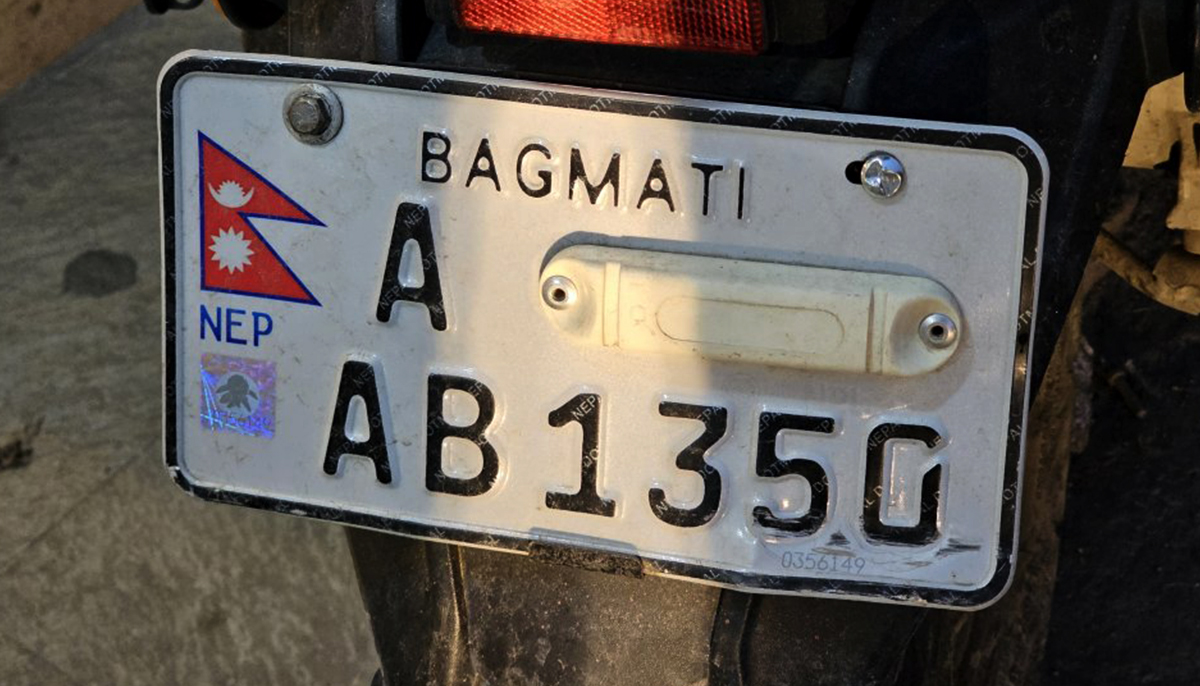
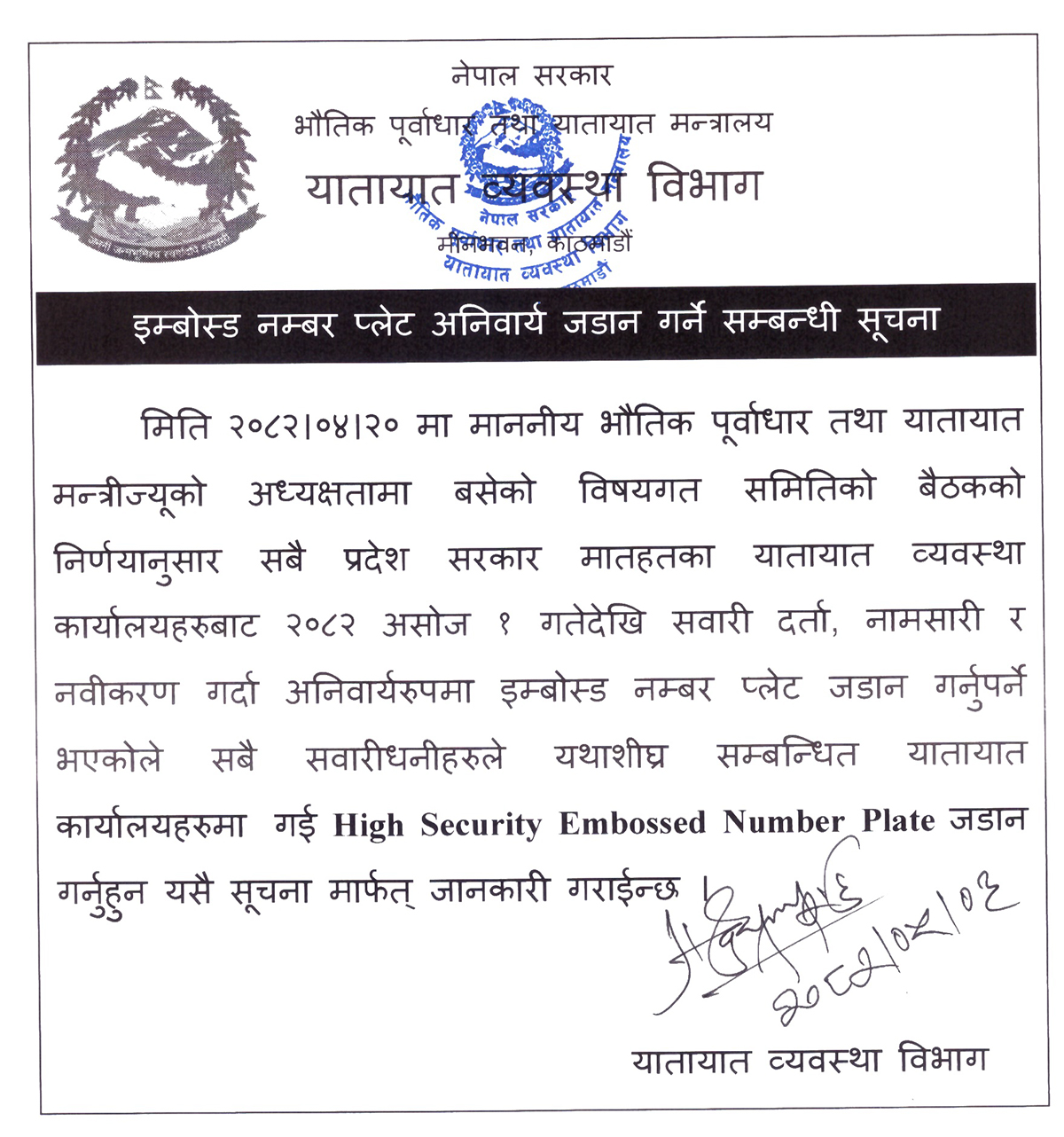
The Department of Transport Management (DoTM) has announced that the installation of embossed number plates will be mandatory for all registered vehicles across Nepal beginning September 17 (Ashoj 1).
In a notice issued on Tuesday, the DoTM stated that vehicle registration, ownership transfer, and renewal services will only be provided after the mandatory installation of embossed number plates. Vehicle owners have been urged to visit their respective transport offices to ensure compliance before the deadline.

The embossed number plates must be installed on all vehicles handled by transport offices nationwide, including those under provincial jurisdictions. To support enforcement, the Ministry of Physical Infrastructure and Transport will coordinate with the Ministry of Home Affairs and traffic police, providing technical assistance for a smooth rollout.
Background and Purpose
Embossed number plates were initially introduced in Nepal in 2021 with plans to make them mandatory. However, public resistance and operational challenges led authorities to temporarily limit their use to newly registered or transferred vehicles. With the September 17 deadline, the government is now enforcing full implementation.
The embossed plates are machine-readable, tamper-proof, and more secure than traditional plates, helping authorities digitize and streamline vehicle records. Officials emphasized that this initiative will improve monitoring, regulation, and public service delivery within the transport sector.
Cost Details
The installation charges are set as follows:
- Motorcycles and scooters: Rs 2,500
- Cars, jeeps, vans, and tractors: Rs 3,200
- Heavy vehicles: Rs 3,600
These fees are to be paid separately during the installation process at authorized transport offices.
Challenges in Obtaining Embossed Number Plates
According to first-hand accounts, completing this entire process can take an entire day. With over one million motorcycles and scooters in Bagmati Province alone, and only a single facility in Gurjudhara handling installations, the current system presents a major accessibility challenge for residents of Kathmandu, Lalitpur, Bhaktapur, and surrounding districts.
Vehicle owners argue that the current setup is inconvenient and inefficient, calling for a more streamlined process where all services—from token collection and fee payment to plate installation—can be completed under one roof. The long lines, and the tiresome procedure discourage vehicle owners from promptly complying with the new mandate.
With the September 17 rollout, Nepal is set to adopt modernized, secure, and digitized vehicle management, marking a major step forward in the country’s transportation infrastructure; however, significant logistical challenges remain.
Image courtesy: Online sources








Same Same, But Different: MG and Wuling's EV Battle

Jetour Opens Pre-Bookings in Nepal; T1, T2 Prices Announced